TECHNICAL SUMMARY
Cartridge shells served as the physical face of 90s gaming, blending durable industrial design with regional security measures and iconic aesthetic identities.
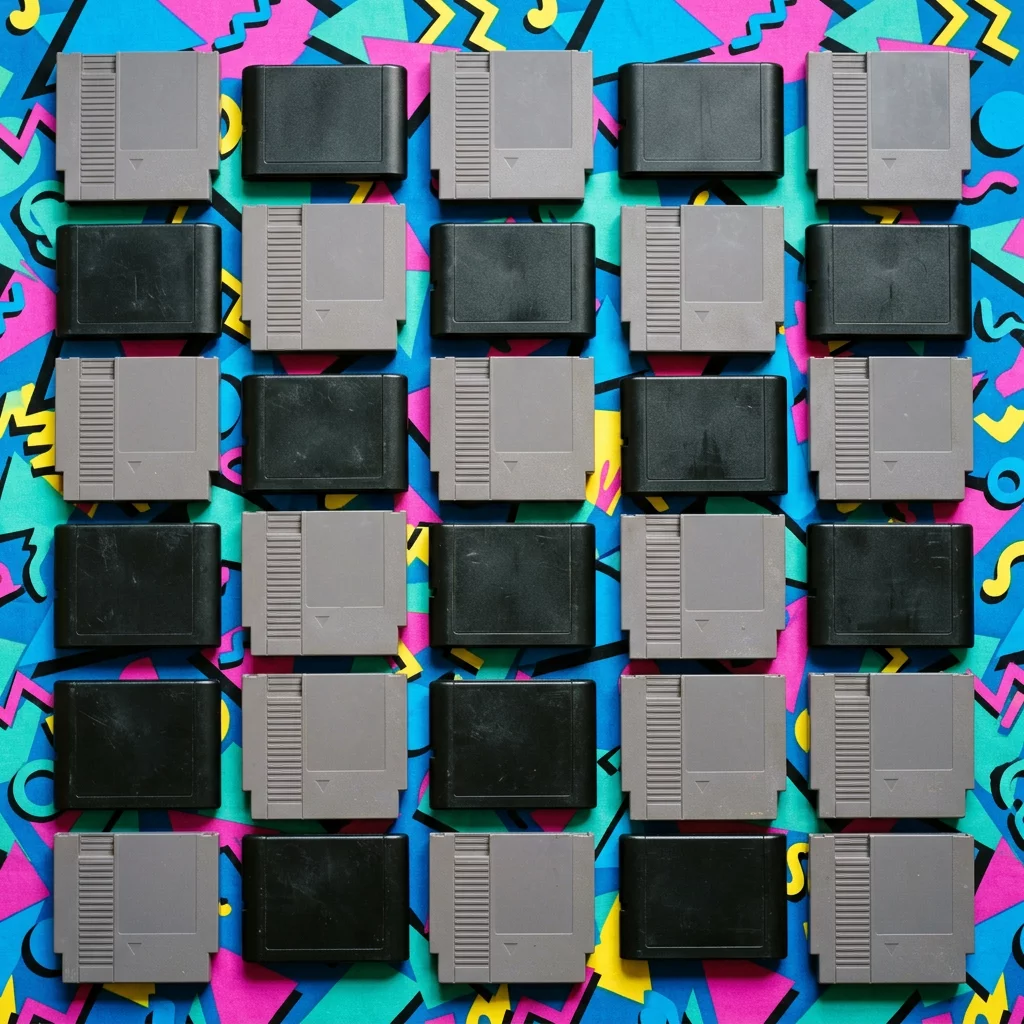
Plastic shells were engineered for extreme resilience. Engineers selected high-impact ABS plastic to survive schoolyard swaps and accidental drops across hard surfaces. These casings enclosed the fragile PCB, protecting the silicon from static discharge and slow oxidation. The texture often featured a fine matte finish, giving the modules a premium feel during the height of the 16-bit era.
Designers integrated unique physical shapes to enforce region locking. A Japanese module often had rounded corners, while its American counterpart utilized a wider, more rectangular profile with specific locking tabs. This simple physical discrepancy effectively prevented users from inserting foreign software into their local consoles. It forced a market division that lasted for several hardware generations.
The variety of colors signaled different tiers of quality or special editions. Standard grey was the industry norm, but publishers occasionally opted for translucent plastics or vibrant reds and golds to highlight blockbuster releases. Bootleg markets took this further, flooding shelves with bright yellow shells that lacked the internal structural ribbing of official products. These variations transformed simple storage devices into iconic collectors' items that are highly sought after today.
TRANSMISSION LOGS
No transmissions logged yet. Be the first to signal.
INITIATE TRANSMISSION