TECHNICAL SUMMARY
Storing megabits of data was an expensive challenge. Memory chips evolved rapidly during the console wars, shifting the landscape of what was possible in interactive entertainment.
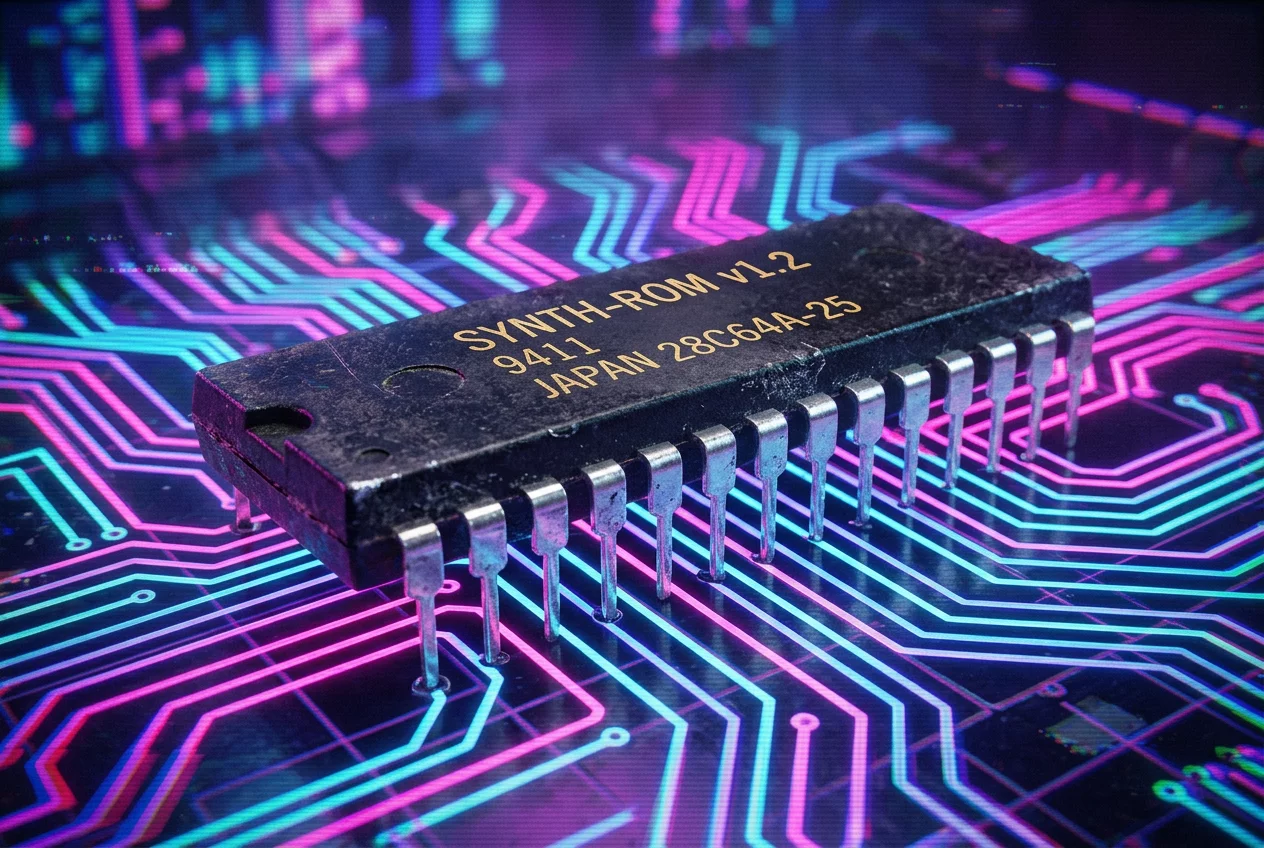
During the height of the 1990s, the physical reality of game design was dictated by the price of silicon. Unlike modern storage where gigabytes are trivial, every single kilobit of ROM (Read-Only Memory) came with a calculated cost that developers had to justify to publishers. The transition from 8-bit systems like the NES to 16-bit titans like the Genesis and SNES wasn't just about faster processors; it was about the expansion of the memory bus and the ability to address larger banks of data.
Mask ROM chips were the industry standard. These were permanently programmed at the factory level, making them robust but inflexible. Inside a typical cartridge, you would find these rectangular black blocks soldered onto a PCB, often accompanied by a smaller SRAM (Static RAM) chip if the game supported saving. This SRAM required a continuous power source to maintain the integrity of the data, which explains the presence of the iconic coin-cell batteries found inside RPG cartridges.
As the decade progressed, we saw the introduction of more complex memory mapping. Bank switching allowed consoles to access more memory than their CPU could naturally address at once. This technical wizardry enabled late-generation titles to feature massive sprites and cinematic soundtracks that technically exceeded the hardware's original specification. It was a golden age of optimization, where engineers squeezed every possible byte out of the limited silicon real estate.
TRANSMISSION LOGS
No transmissions logged yet. Be the first to signal.
INITIATE TRANSMISSION