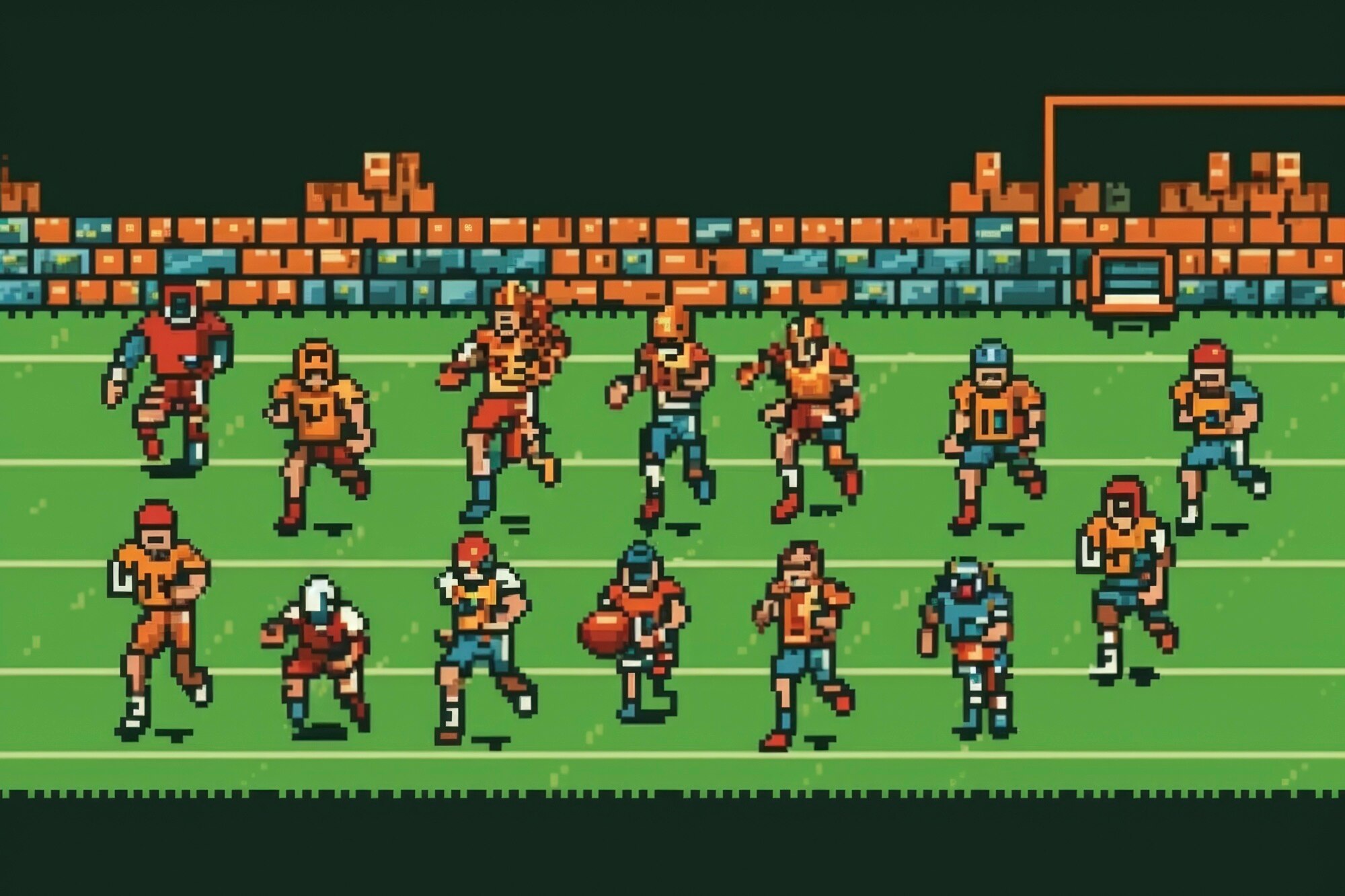
Early sports simulations faced a unique hurdle compared to their platformer counterparts. While a platformer could rely on tiles and repetitive patterns, a sports title had to simulate a cohesive, data-heavy environment where dozens of unique entities interacted simultaneously. Developers were forced to compress player statistics and AI behavior into incredibly small file sizes, often measuring in mere kilobytes. This required a deep understanding of bitwise operations and efficient memory mapping.
Bit-Packing Player Statistics
Managing the attributes of an entire league of players—speed, strength, accuracy, and stamina—consumed significant memory if stored as standard integers. Engineers solved this by using bit-packing. Instead of using a full 8-bit byte for a single attribute, they assigned specific bit ranges within a byte to different stats. A single 8-bit memory address might hold a 4-bit value for speed and another 4-bit value for stamina, effectively doubling the storage capacity for player data at the cost of slightly more complex retrieval logic.
Artificial Intelligence in Kilobytes
The 8-bit and 16-bit processors had limited cycles to process the logic for multiple AI-controlled players. To keep the game running at a smooth frame rate, sports titles utilized simplified state machines. Each player followed basic heuristic rules rather than complex pathfinding. The difficulty levels were often adjusted not by making the AI smarter, but by altering the probability of success for specific actions or increasing the movement speed of opposing sprites. This efficiency allowed for the illusion of a living, breathing match within the tight constraints of the silicon.
Roster management also evolved significantly during this era. Early games used fixed data burned directly into the ROM. As the demand for persistence grew, developers began incorporating battery-backed SRAM. This allowed players to save seasonal progress, trade teammates, and even track career statistics across multiple games. These cartridges became more than just pieces of software; they turned into persistent databases that gamers would treasure for years.
USER FEEDBACK
No comments yet. This could be your first comment.
SUBMIT DATA LOG